Lamb shanks

Yakir Havin
•
June 3, 2026
Lamb shanks are a surprisingly cheap cut that can be a great introduction to braising. The texture of shanks is more flaky and less stringy than something like a chuck roast, and they look good served up with the bone in the middle. Like most braises, these take a while and are probably best left for a weekend.
Ingredients (14)
Ingredients (14)
Instructions
Preheat the oven to 325 °F.
Rough chop the onion, carrot, leek, tomatoes, and garlic. They will eventually be strained out so the shape doesn't matter much.
Finely chop the parsley for garnish.
Season the lamb shanks and sear them in olive oil in a Dutch oven. It's hard to get great browning on them like a steak, but try get at least one side well browned before flipping. Remove from pot.
Tying the shanks with kitchen twine at the top and bottom can help keep the meat on the bone during the long cook.
Sweat the onion, carrot, leek, tomatoes, and garlic for 5-10 minutes till softened. The liquid released from the onions and tomatoes will prevent the garlic from burning.
Deglaze the pot with red wine and reduce a little bit. Add the lamb shanks back to the pot, then add enough beef stock to partially cover the shanks, and bring the pot up a simmer.
Drop some rosemary sprigs and bay leaves into the pot.
Cover the pot and transfer to the oven for about 2.5 hours, until the lamb is tender and can come away from the bone, but not so long that it's falling apart.
Once the pot is removed from the oven, keep covered and rest the lamb shanks for 20-30 minutes.
Remove the lamb shanks, strain the cooking liquid into a pan, and reduce on high to a saucy consistency.
Once mostly reduced, add the shanks back to the pan to warm through, spooning the sauce over the shanks to glaze them.
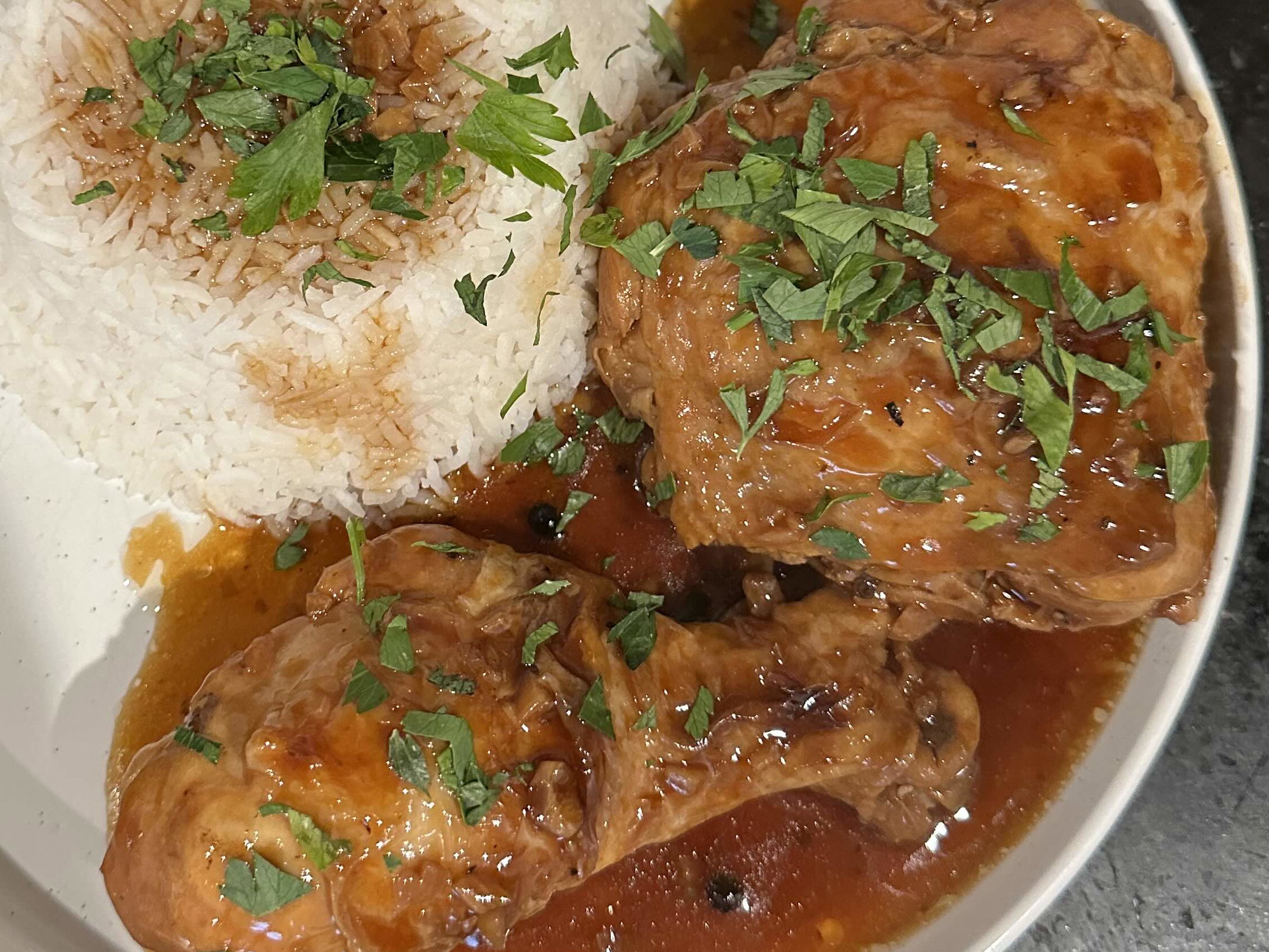
Serve with rice, mashed potatoes, or fries, and garnish with chopped parsley.
Notes
Notes
This recipe follows the typical steps for braising meat: browning the meat, sweating some vegetables/aromatics, deglazing with wine, adding stock, cooking low and slow covered for a number of hours, and reducing the cooking liquid into a sauce. You will recognise this pattern in roast recipes or short ribs.
Subscribe to get my new recipes delivered to your inbox
Comments
Sign in to comment